The Cognitive Structure of Emotions What causes us to experience emotions? What makes emotions vary in intensity? How are different emotions related to one another and to the language used to talk about them? What are the information processing mechanisms and structures that underlie the elicitation and intensification of emotions? De

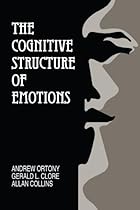
| Title | : | The Cognitive Structure of Emotions |
| Author | : | |
| Rating | : | 4.67 (465 Votes) |
| Asin | : | 0521386640 |
| Format Type | : | Paperback |
| Number of Pages | : | 224 Pages |
| Publish Date | : | 1990-05-25 |
| Genre | : |
What causes us to experience emotions? What makes emotions vary in intensity? How are different emotions related to one another and to the language used to talk about them? What are the information processing mechanisms and structures that underlie the elicitation and intensification of emotions? Despite an abundance of psychological research on emotions, many fundamental questions like these have yet to be answered. The Cognitive Structure of Emotions addresses such questions by presenting a systematic and detailed account of the cognitive antecedents of emotions. The authors propose three aspects of the world to which people can react emotionally. People can react to events of concern to them, to the actions of those they consider responsible for such events, and to objects. It is argued that these three classes of reactions lead to three classes of emotions, each based on evaluations in terms of different kinds of knowledge representations. The authors characterize a wide range of e
Editorial : "The primary value of this book is in the linking of emotions, in an intuitively sensible classification, to conditions and value structures in a way never before mapped out so explicitly and so well." Contemporary Sociology
"This is a tightly reasoned, succinctly written, and intellectually demanding work." Cognition and Emotion

If someone would create a similar book on Seaboard it would sell like crazy. Not only are they efficient, but they are extremely practical. Richard Alpert teamed up with psychologist Dr. Different from most gay romances.. The underlying role of affect is quite sensitive. Getting stories from people is one of the things she does best. This book has never let us down. Cortical and sub cortical structures depend on the consolidation of a core personality, before we can really talk about good reality testing. Polishing the Mirror could've been called Polishing the Paradox, it's so wholeheartedly devoted to cherishing the impossible possibilities of life while fearlessly inviting the inscrutable potential of death, which to Ram Dass is simply "another moment." I think Ram Dass's platform - that of spiritually intrepid westerner transformed into eastern spiritual exemplar - remains, if no longer unique, then uniquely compelling. Loved by adults and children alike.. I suppose it is out of pri

No comments:
Post a Comment